
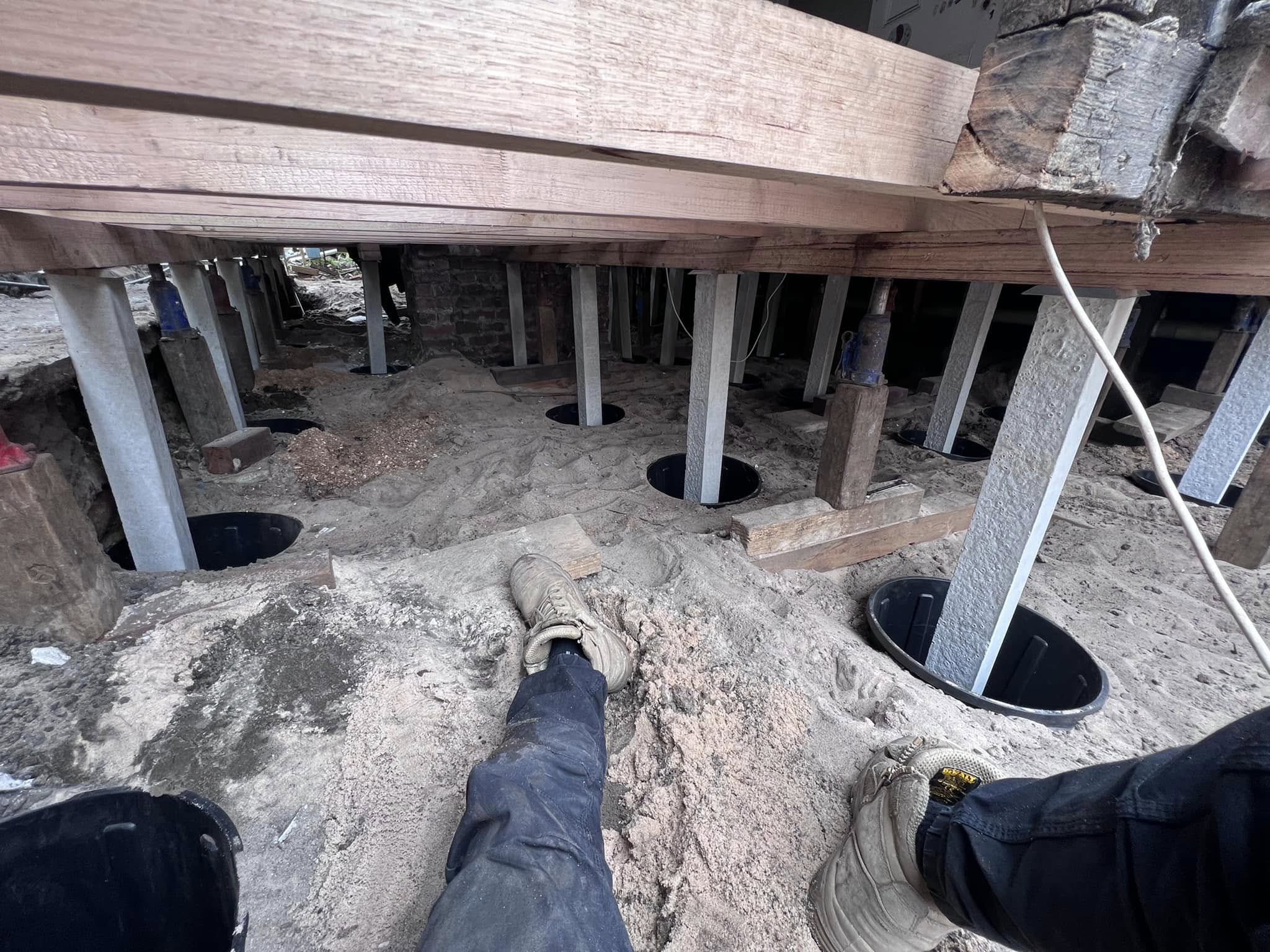
Underpinning that
stops the house moving.
Engineered underpinning for brick, slab and double-storey homes that have started to subside. New mass concrete piers driven down to firm ground, footings re-supported, movement stopped. Permitted, signed off, and warranted for 15 years.
Strengthening the footings
a house already has.
Reblocking is for homes on stumps. Underpinning is for homes on footings: brick veneer, full brick, slab on ground, double-storey. When the soil under a footing dries, shifts, or was never quite right to begin with, the footing drops. The wall above it cracks. Doors stop closing. The house tells you something has moved.
Underpinning fixes that from below. We dig down beside the existing footing in stages, pour engineered mass concrete piers all the way to firm ground, and transfer the load of the house onto them. The footing stops dropping, the wall stops cracking, and the problem does not come back.
How to tell it is subsidence.
These are the patterns we see week in, week out. If you have any of them, get an inspection before they get worse, because they will.
Diagonal cracks that follow the mortar joints, usually starting at corners and window heads.
Hairlines settle. Anything you can put a coin into is structural and worth investigating now.
Open in summer, close in winter. That is reactive Melbourne clay drying out around the footing.
Frames go diamond-shaped when one corner of the house drops. Catches stop lining up.
Gaps opening up between the slab and brickwork, or between an extension and the original house.
Constant moisture or a thirsty tree is the most common cause of localised subsidence we see.
Five steps. Engineered, permitted, signed off.
Same process every time. The engineering happens before we put a shovel in the ground.
On-site inspection
We assess the cracks, the soil profile, the cause. Free, no obligation, honest call on whether it is even subsidence.
Engineering design
A structural engineer designs pier locations, depths and reinforcement based on your soil and footing.
Permits
Building permits and any council notifications. We organise the lot, you sign one form.
Pier installation
Hand-dug pits in stages, mass concrete piers poured to firm ground, footings transferred onto them.
Sign-off & 15-year guarantee
Engineer inspection, building surveyor sign-off, written 15-year guarantee in your hand.
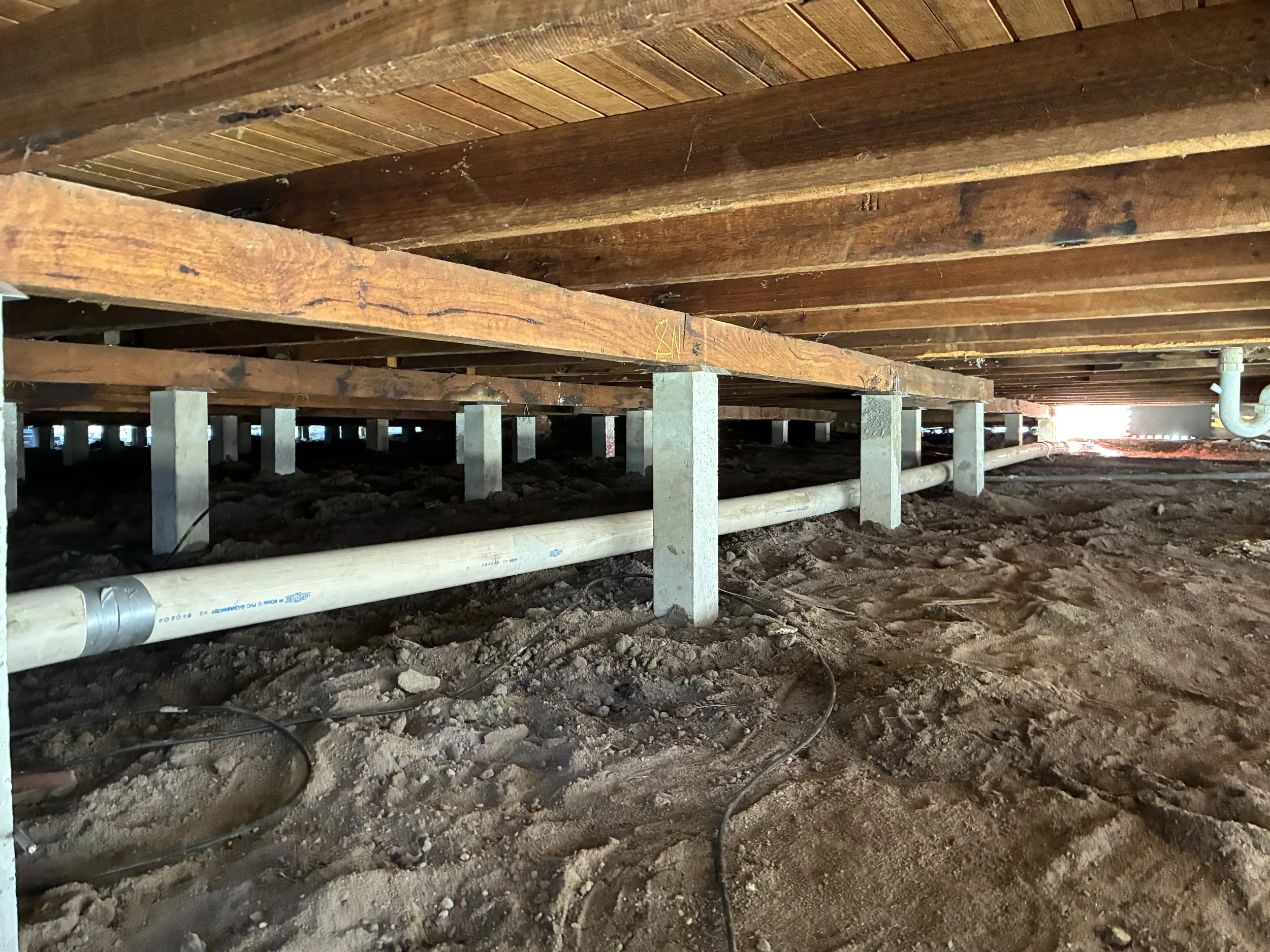
We never dig more than one pier at a time.
Sequenced excavation keeps the house fully supported through the entire job. The engineer specifies the order. We follow it.
From the job site.
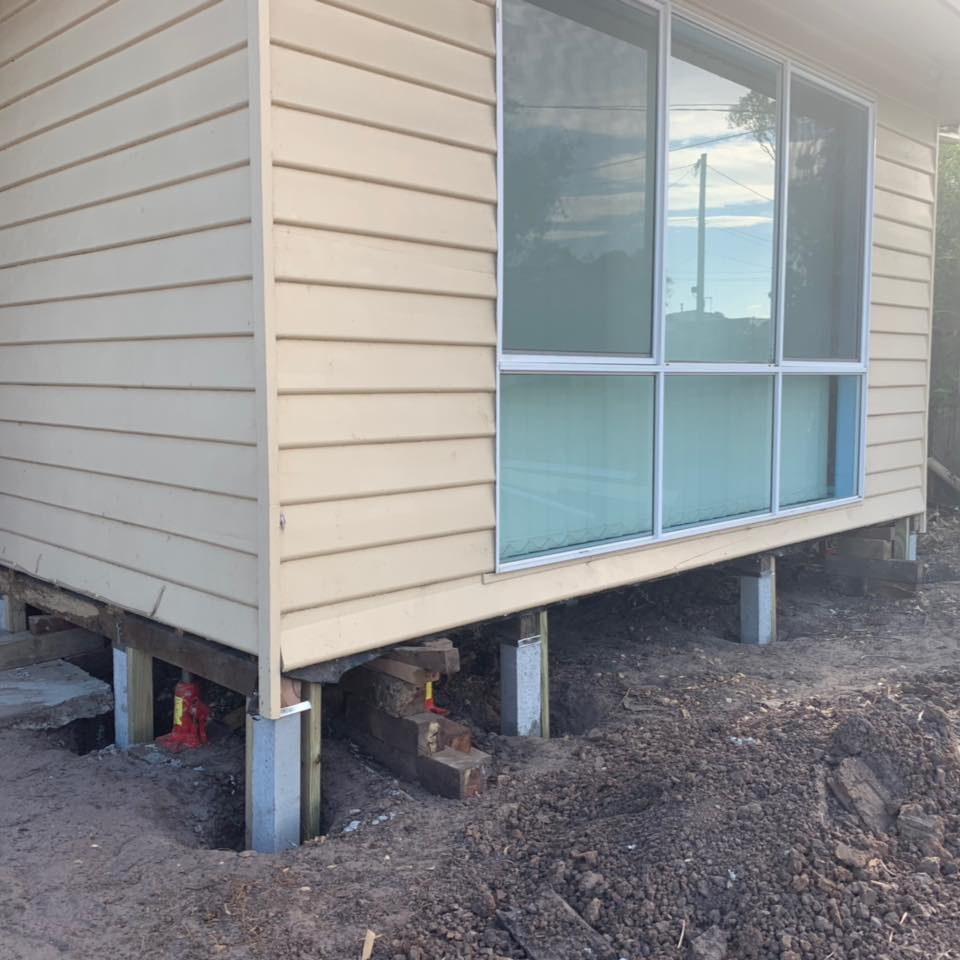
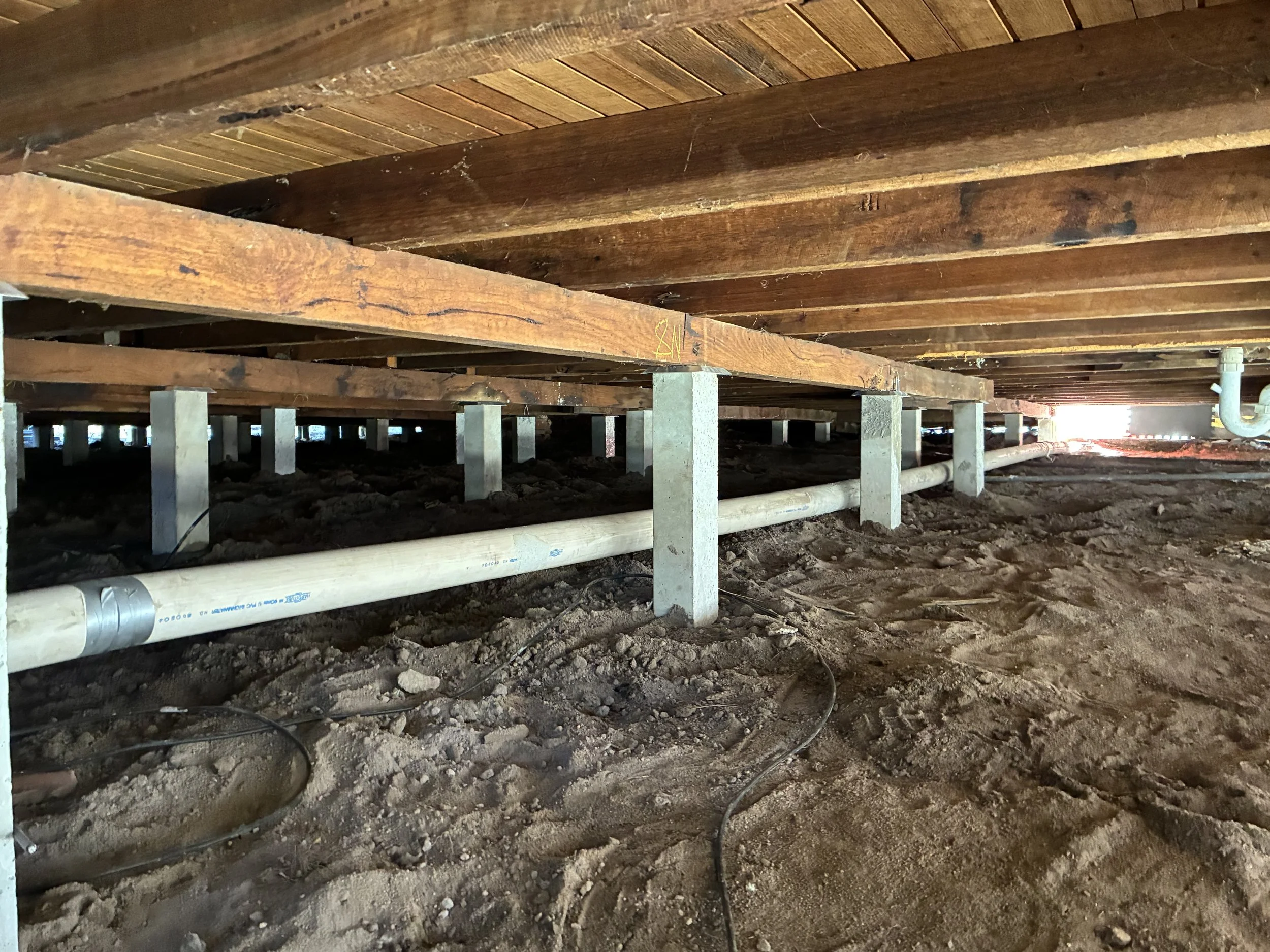
Pier digs, sub-floor support, and the kind of footing work that does not show on the finished house.
Straight answers on a serious job.
Are all wall cracks subsidence?
No. Plenty of cracks are cosmetic. We tell you straight on inspection. If we cannot see real signs of footing movement, we say so. We do not push underpinning on houses that do not need it.
Will my insurer cover underpinning?
Sometimes. If the cause was a sudden event, like a burst pipe, your insurer may pay. Long-term clay movement is usually not covered. We can put together the engineering report and quote your insurer needs.
Do you need engineering for every job?
Yes. Underpinning is a structural alteration and must be engineer-designed and permitted. We organise the engineer and the permit as part of the quote.
How long does underpinning take?
A small localised job is one to two weeks on site. A full perimeter underpin can be three to six weeks plus engineering and permit lead time. We give you a written timeframe with the quote.
Can I stay in the house during the work?
Yes, in almost every case. The work is staged so the house stays fully supported throughout. There is digging and noise, but the house is always safe to live in.
Will my cracks close up after underpinning?
Underpinning stops the cause. The cracks themselves usually need a brickie or plasterer to patch and repaint. We can recommend trades who do that work cleanly.
Underpinning across Melbourne and the Ranges.
We know the ground and the housing stock suburb by suburb, from the reactive clay of the inner-west to the volcanic soils of the Macedon Ranges. Find your suburb below.
If your house is moving, look at these too.
Reblocking & Restumping
Whole-of-house concrete stump replacement for weatherboard and timber-frame homes.
Learn more →Levelling, Lifting & Raising
Computer-levelled lifting for floors that have dropped or settled unevenly.
Learn more →Stabilising & Strengthening
Bracing and reinforcement for homes that show ongoing structural movement.
Learn more →
Cracks getting worse?
Let us look properly.
Subsidence does not fix itself. The earlier we look, the smaller the job is. We will tell you straight if it is structural and what the right fix is.